Work
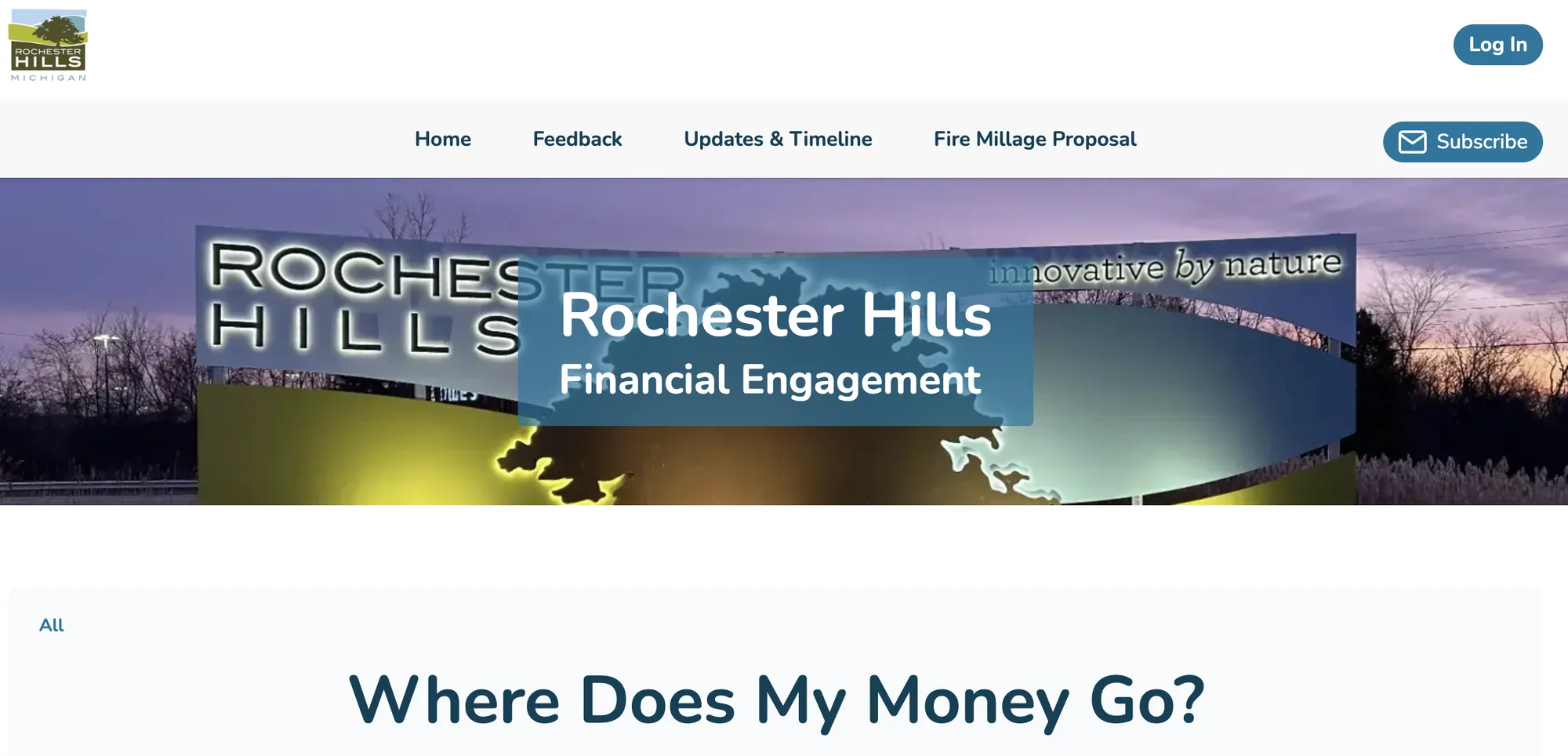
Rochester Hills
Turning one customer's implementation into a repeatable playbook.
Customer Implementation · GovTech · Customer Success · Product Strategy · 2026
The Problem
Financial Engagement was a new product. We had launched sites before, but there wasn't yet a clear playbook for what a successful implementation looked like.
The challenge wasn't simply launching another customer. It was figuring out what success should look like.
The Context
Rochester Hills became much more than an implementation.
The team was deeply engaged, willing to experiment, and committed to making the experience genuinely useful for residents.
That created an opportunity to learn together.
Instead of treating implementation as a checklist, we treated it as an ongoing product conversation.
What We Built Together
Over the course of the project we iterated on nearly every part of the experience.
We refined messaging, experimented with new ways to present financial information, tested resident engagement strategies, improved onboarding, and continuously fed customer feedback back into Product.
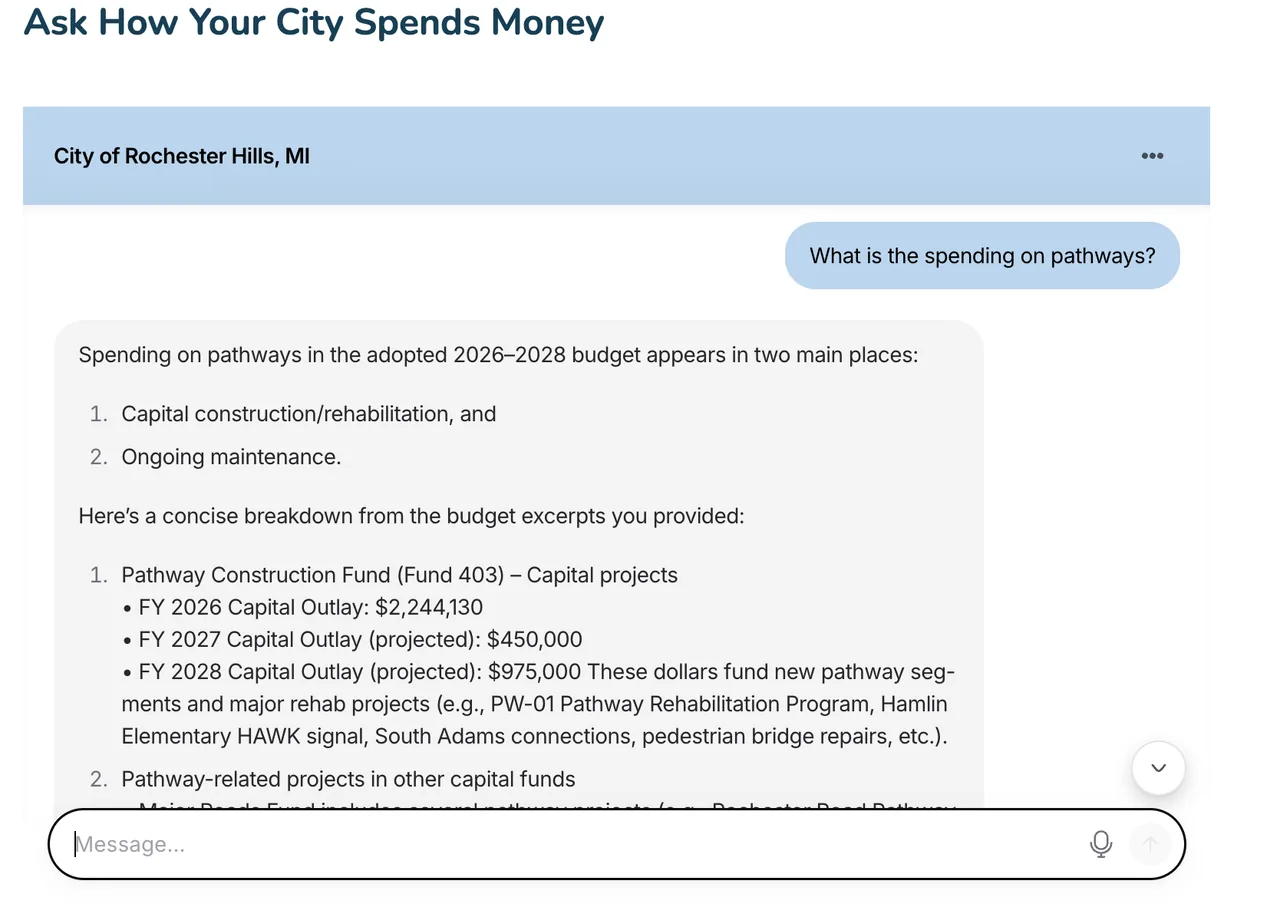
Many of the ideas, templates, and processes that emerged from Rochester Hills became part of how future Financial Engagement implementations would be delivered.
The implementation became the playbook.
Outcome
Rochester Hills became one of our flagship Financial Engagement customers.
The project evolved into webinars, customer stories, internal best practices, and a stronger implementation methodology for future customers.
The work also helped strengthen relationships across the organization, including executive leadership and city leadership, and demonstrated what was possible when Customer Success, Product, and customers worked as one team.
While the launch itself was successful, what mattered most was sustained engagement after go-live.
Impact
3,533
Residents visited the engagement site.
178
Pieces of resident feedback submitted.
166
Residents subscribed for future updates.
What I Learned
The implementation stopped being a project and became a laboratory for better customer success.
Staying close to Rochester Hills after launch surfaced patterns I wouldn't have seen otherwise: which messages resonated, which onboarding steps mattered, which features actually improved the resident experience. Those patterns became reusable practices for the implementations that followed.
They also shaped what I brought back to Product, and eventually led me to build AI-powered tools that could act on customer feedback faster than I could alone. The real outcome wasn't a successful launch. It was a shift in how I approach Customer Success.