Work
AI Knowledge Operating System
A philosophy for making customer knowledge compound.
Independent Project · Customer Success · AI · Knowledge Systems · 2026
The Story
As a Customer Success Manager, I participated in dozens of customer meetings every month. Each conversation generated valuable knowledge: product feedback, implementation lessons, customer priorities, political realities, feature requests, strategic risks, wins, historical context.
The organization already had this information. The problem wasn't collecting knowledge. The problem was distributing it.
I found myself answering the same questions repeatedly. Product wanted recurring feature requests. Leadership wanted strategic trends. Professional Services wanted implementation lessons. Customer Success wanted richer meeting preparation. Sales wanted customer stories.
The knowledge already existed. It simply couldn't be disseminated efficiently.
I realized we didn't have a data problem. We had a knowledge distribution problem.
Most AI meeting tools preserve conversations. I wanted to preserve learning.
Core Insight
Most AI meeting assistants answer an important question: “What happened during this meeting?” They're excellent at documenting conversations.
I became interested in a different question: “What has our organization learned from every customer conversation we've ever had?”
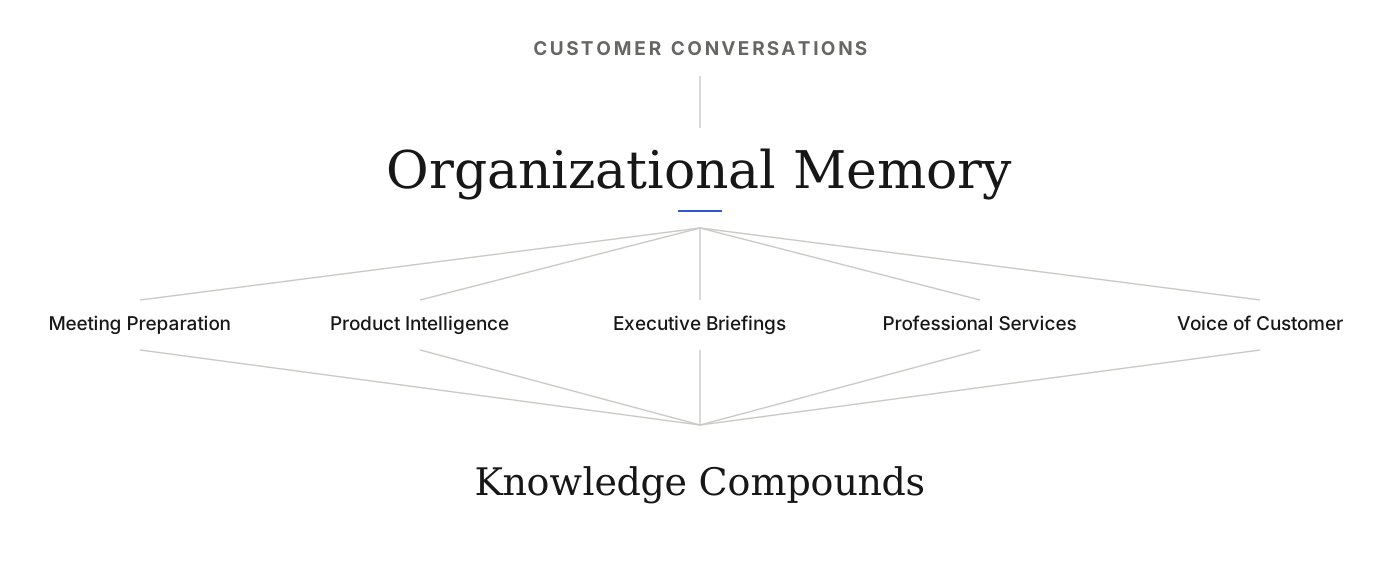
Meeting summaries preserve conversations. Organizational memory compounds knowledge.
That distinction became the foundation for this project.
What I Built
Rather than building another meeting assistant, I designed an AI-powered organizational memory. Every customer interaction became structured knowledge instead of another isolated transcript.
The system captured reusable organizational knowledge, including customer goals, implementation challenges, feature requests, product feedback, historical commitments, risks, wins, and organizational context.
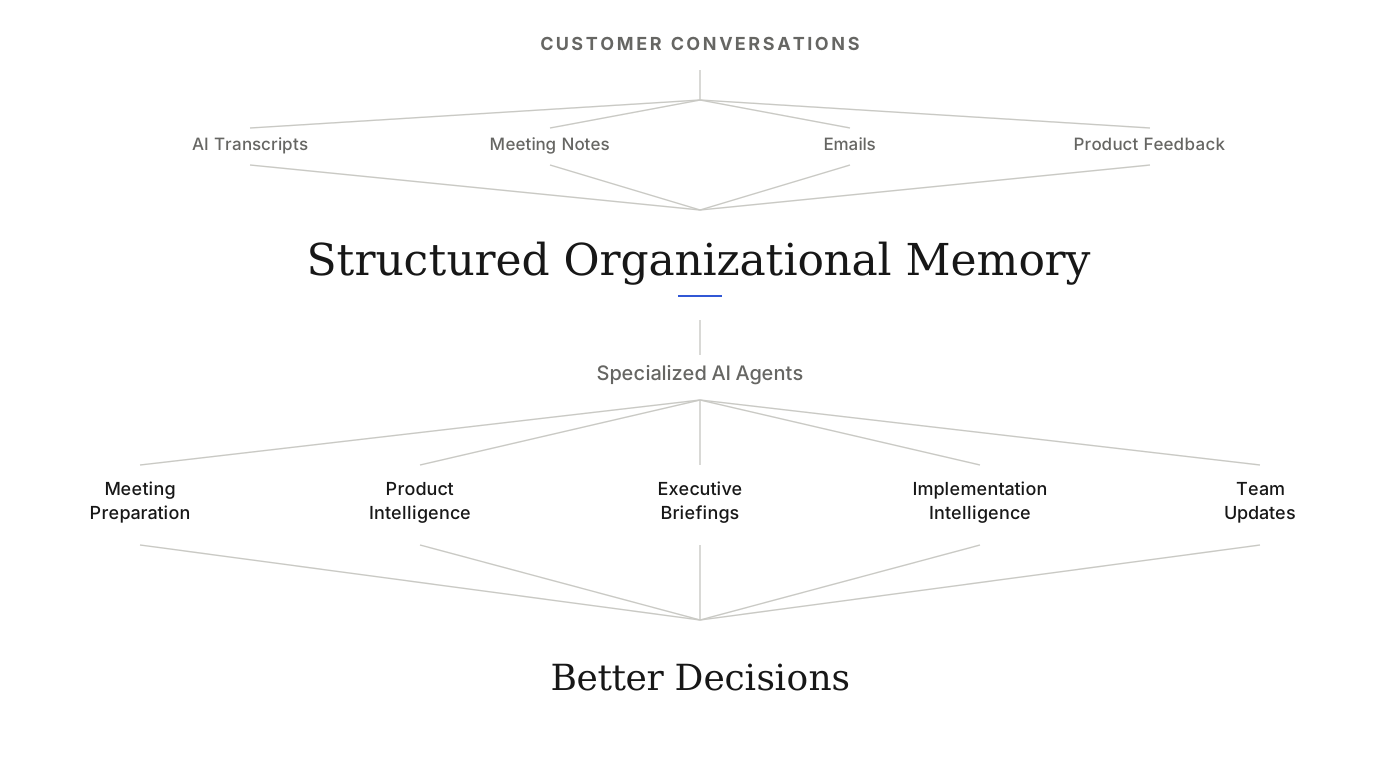
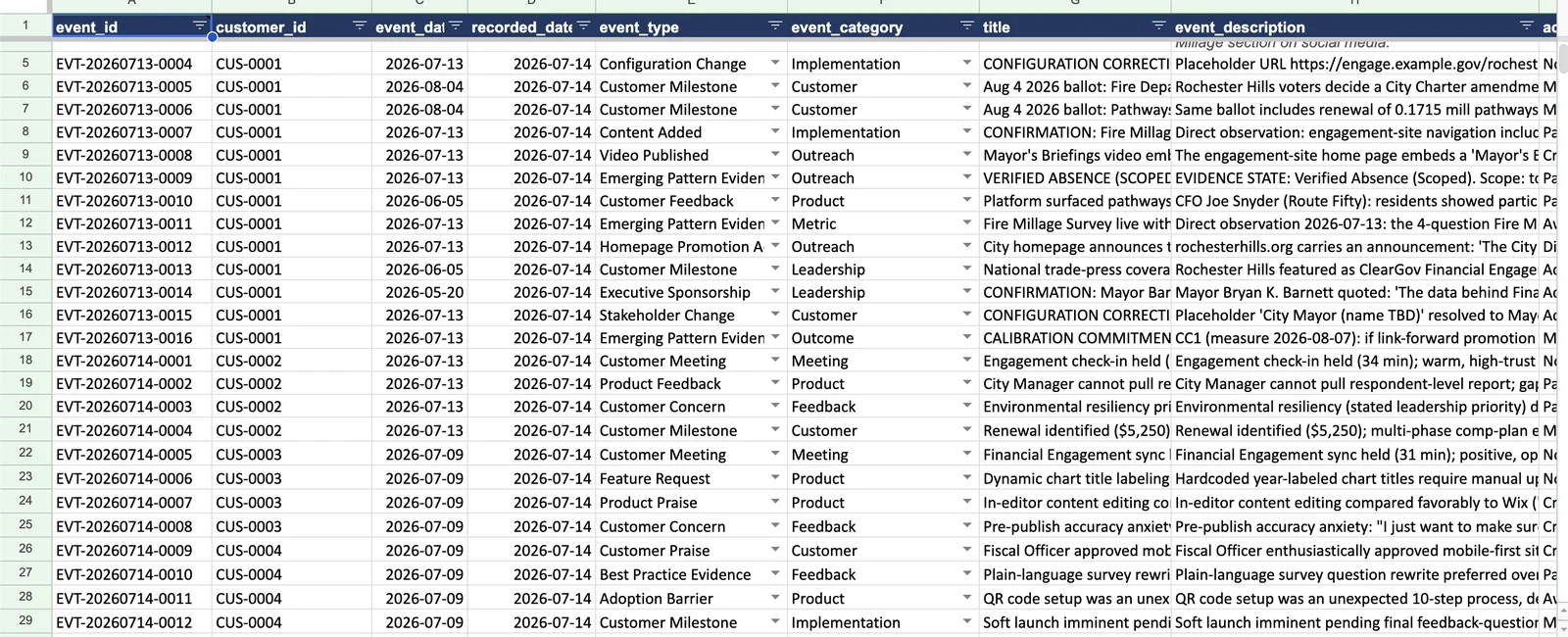
Rather than building one AI assistant, I built multiple specialized AI agents that all referenced the same shared organizational memory. Examples include meeting preparation, product intelligence, executive briefings, team updates, implementation intelligence, and voice of customer.
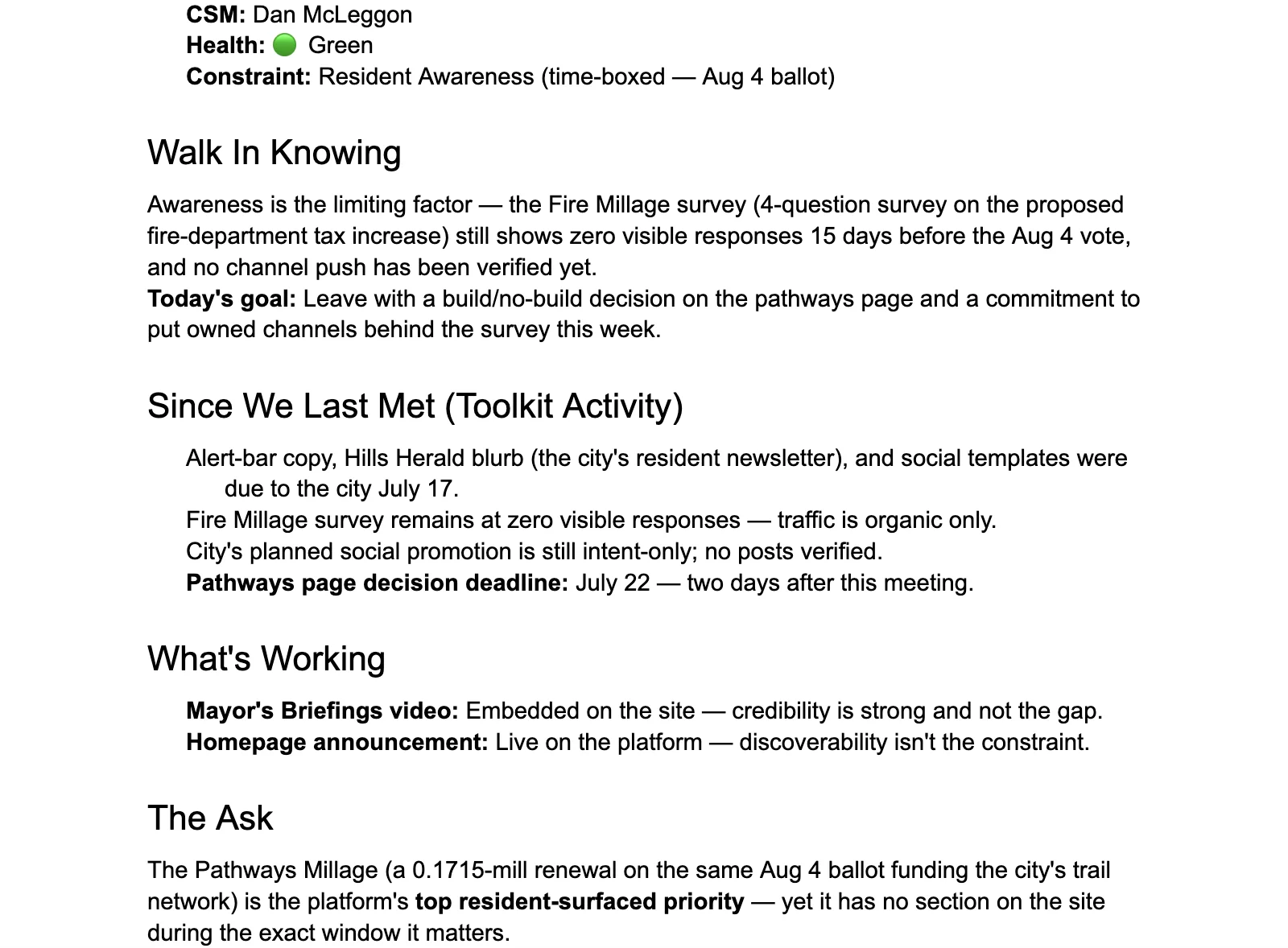
Each agent presented the same underlying knowledge differently depending on who needed it. One customer conversation could now create value across multiple teams simultaneously.
The Outcome
The biggest outcome wasn't simply reducing meeting preparation from nearly an hour to just a few minutes. The bigger outcome was changing how customer knowledge moved through the organization.
Customer intelligence became reusable. Patterns became visible. Institutional knowledge replaced tribal knowledge.
Product discussions became grounded in recurring customer evidence instead of isolated anecdotes. Leadership gained visibility into trends without reading dozens of meeting transcripts.
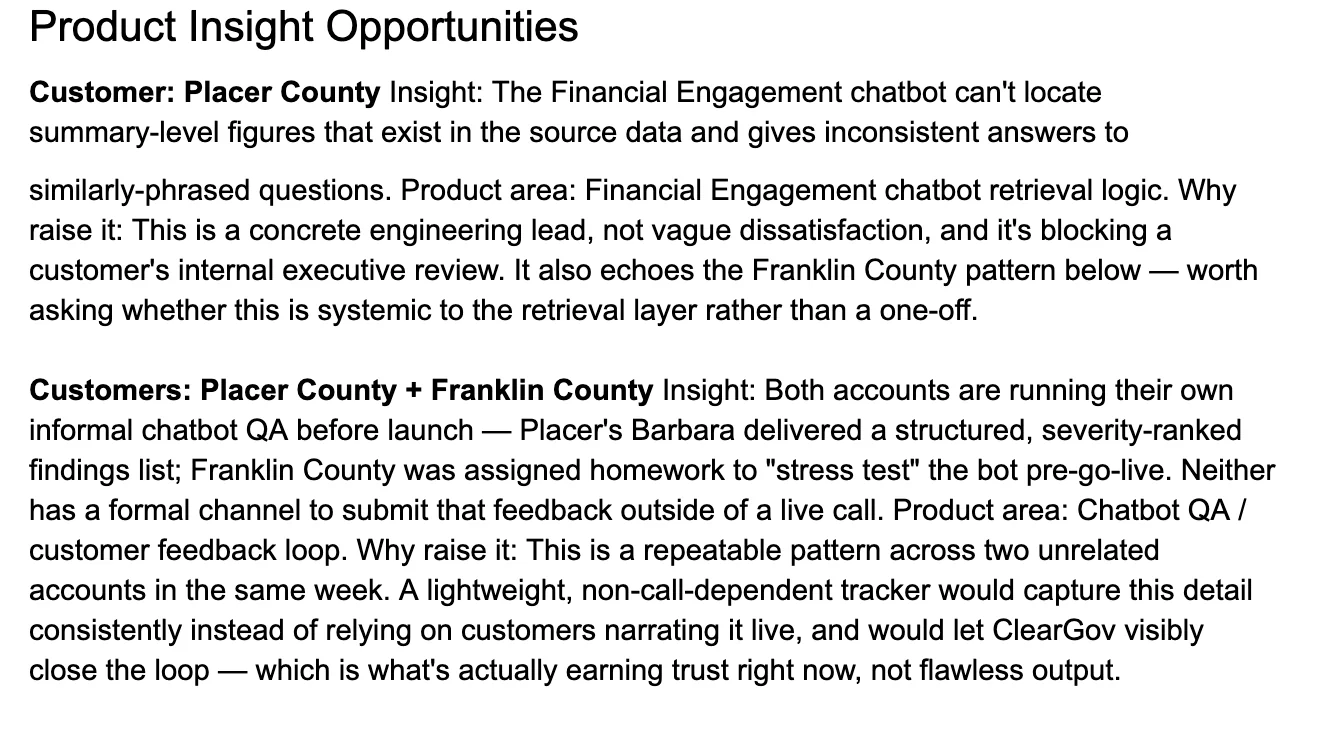
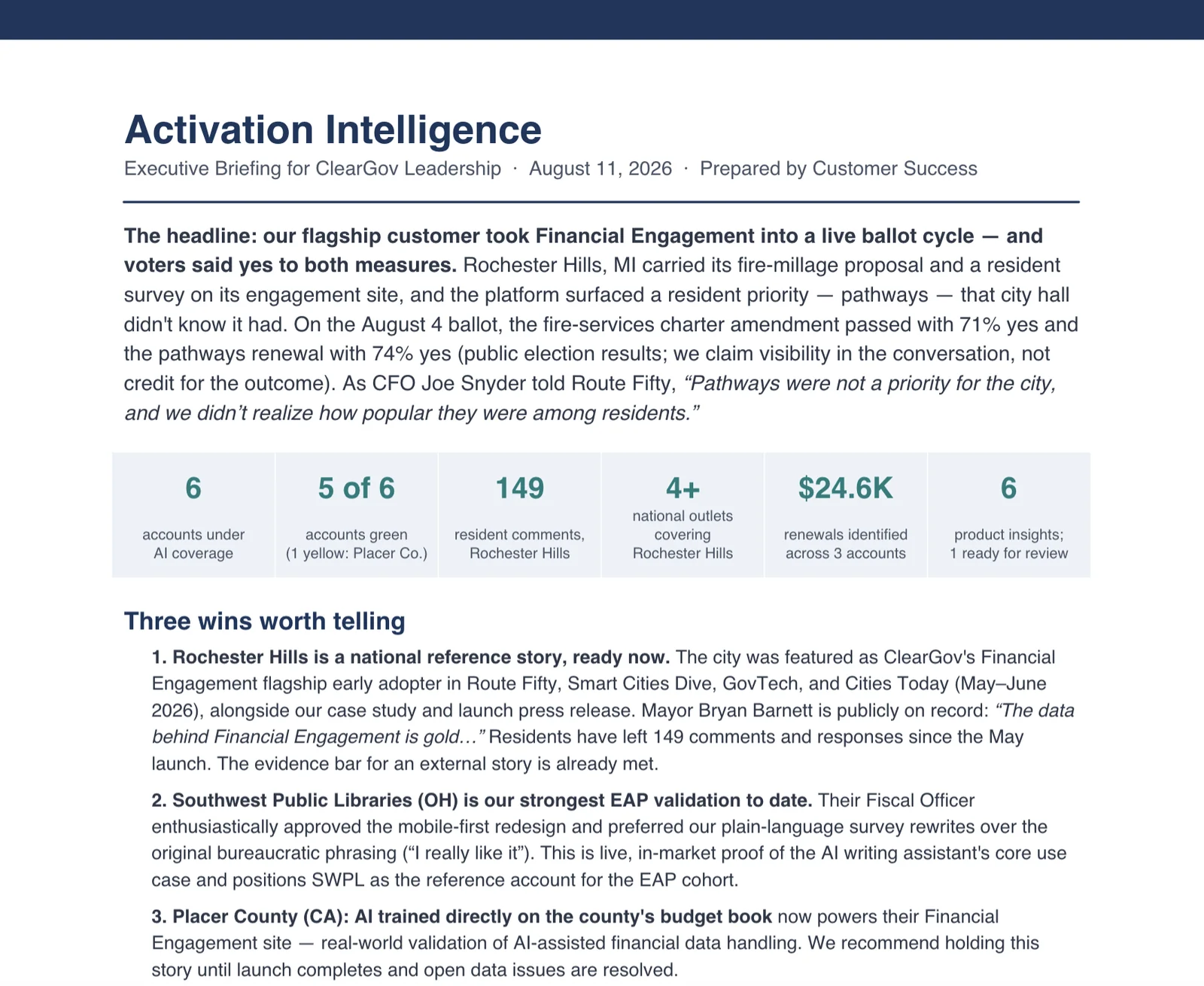
Every conversation continued creating value long after the meeting ended.
Knowledge Should Compound
Knowledge should compound.
Every customer interaction should leave the organization smarter than it was before. The value of a conversation shouldn't end when the meeting does — it should become part of a permanent organizational memory that informs future decisions across the business.
Organizations already generate extraordinary amounts of customer intelligence. The opportunity isn't collecting more of it. It's ensuring every interaction makes the organization smarter than it was before — and building systems that keep learning from themselves, not just automating more work.